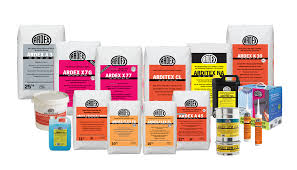
Self-Leveling Underlayments: What Homeowners in Victoria Should Know
Uneven floors are one of the most common issues we see during flooring installations across Victoria.
Whether it’s an older home settling over time or subfloor movement from moisture, dips and humps can
cause problems with luxury vinyl plank, laminate, carpet tiles, and even hardwood.
One of the most effective solutions is using a self-leveling underlayment (often called SLU or “self-leveler”).
Here’s what homeowners should understand before choosing this option.
What Is a Self-Leveling Underlayment?
A self-leveling underlayment is a cement-based, free-flowing product designed to smooth and flatten
concrete or wood subfloors. Once mixed with water, it spreads out evenly and naturally finds its own level,
creating a smooth, flat surface ready for flooring installation.
When Should You Use a Self-Leveler?
- Your floor has dips, waves, humps, or uneven spots
- You’re installing rigid LVP/LVT that requires a flat surface
- You want to correct concrete imperfections without full grinding
- Your subfloor transitions need height correction
SLUs are especially useful during renovations where grinding may not be ideal due to dust or noise.
Benefits of Using a Self-Leveling Underlayment
- Fast curing: Many products can be walked on in as little as 2–4 hours.
- Perfectly smooth finish: Ideal for modern flooring systems.
- Reduces installation failures: Prevents hollow spots, gaps, and joint movement.
- Compatible with radiant heating systems.
Proper Surface Prep Is Critical
Self-leveler is only as good as the prep underneath it. At Floormasters, we make sure:
- Concrete is clean, profiled, and primed correctly
- Wood subfloors are stiffened and sealed so the SLU does not leak through
- Cracks are repaired before pouring
- Moisture levels are tested to prevent future issues
Poor prep is the #1 reason self-leveler fails, leading to cracking, debonding, or lifting.
Do You Always Need a Self-Leveler?
Not necessarily. For high points, grinding is often the more cost-effective option.
Many projects require a combination of grinding and self-leveling to meet manufacturer flatness
requirements, especially for LVP and engineered flooring.
Our Process at Floormasters
- On-site evaluation with laser leveling
- Moisture and substrate testing
- Grinding or patching as needed
- Professional self-leveler installation
- Final prep for flooring install
We use commercial-grade materials designed for long-term durability and compatibility with modern floor coverings.
Need Help Leveling Your Floors?
If you’re planning a renovation in Victoria or the surrounding area, our team can inspect your subfloor and recommend the
best approach—grinding, patching, leveling, or a combination of all three.
Floormasters Group – Professional Floor Prep, Leveling & Installation Support
Serving Victoria, Langford, Colwood, Sooke, and surrounding areas.